Food processing equipment must take full account of the hygiene and safety of the food being produced.
At the same time, food manufacturers often employ proprietary production equipment to highlight the distinctive characteristics of their products.
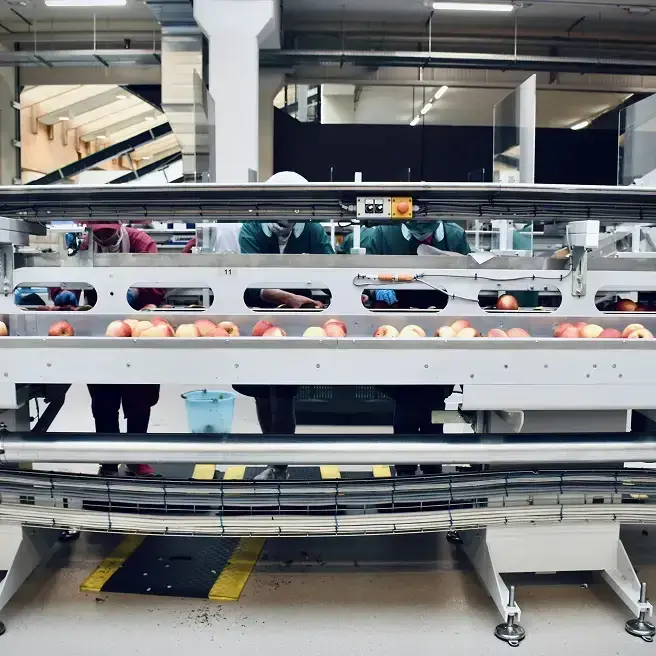
The food production process is broadly divided into two parts: the pre-processing stage (raw material handling, food manufacturing/processing) and the post-processing stage (dosing/measuring, packaging/filling).
The pre-processing stage includes operations such as washing, cutting and sorting raw materials, and a wide variety of production equipment has been developed to suit different production methods. In the post-processing stage, there are particularly high demands on the precision and speed of the equipment.
In recent years, issues such as foreign objects being found in food have raised serious public concerns regarding food safety. Consequently, there is a growing demand for food processing equipment that is safer, more reliable and easier to maintain.
Through the application of materials technology, lubrication technology and precision engineering, these advancements have met market demands and made a significant contribution to enhancing the performance of food processing equipment.